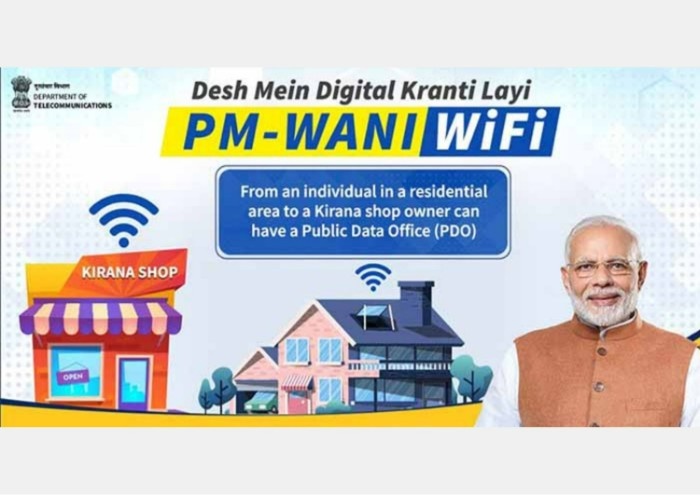
In today’s time, internet is not just a need — it has become a part of our daily life. But still, in many small towns and villages, people face problems in getting affordable and fast internet. To solve this problem, the Government of India launched the PM-WANI Scheme (Prime Minister Wi-Fi Access Network Interface).
This scheme helps people to get public Wi-Fi at low cost or even free, through local shops, service providers, and small businesses. The main aim is to bring high-speed internet to every corner of the country — even to rural areas.
What is PM-WANI Scheme?
PM-WANI means Prime Minister Wi-Fi Access Network Interface. It is a government project that allows people to access internet through public Wi-Fi hotspots made available by small vendors or local shop owners.
Under this plan, even a small tea stall, grocery shop, or school can become a Public Data Office (PDO) and offer Wi-Fi services to nearby people. There is no need for a big license or complex setup.
Main Objective of PM-WANI
The main goal of this scheme is to:
- Provide affordable and fast Wi-Fi connection to every Indian.
- Help small shop owners and entrepreneurs earn extra income by offering internet services.
- Support the Digital India Mission by improving internet access across rural and urban India.
How PM-WANI Works
PM-WANI system has four important parts:
- Public Data Office (PDO) – These are local shops or individuals who provide Wi-Fi to users.
- Public Data Office Aggregator (PDOA) – They manage multiple PDOs and handle their system or payment.
- App Provider – Mobile app that helps users find available Wi-Fi hotspots nearby.
- Central Registry – It keeps all records and details of registered PDOs and PDOAs.
When users connect to a Wi-Fi hotspot through the app, they can buy small data packs and enjoy internet easily — without any long registration or paperwork.
Features of PM-WANI Wi-Fi Plan
- Easy access: Users can connect through a simple mobile app.
- No license required: Anyone can become a Wi-Fi provider (PDO) after simple registration.
- Low-cost plans: Data packs are available for very low prices.
- Digital payments: Users can pay using UPI, wallet, or online methods.
- Job creation: Local entrepreneurs can earn money by providing internet to people.
Implementation and Rollout
The government made this plan flexible and open for everyone. PDOs can use wired broadband, fiber, or mobile network for connectivity. It helps in creating a strong and wide Wi-Fi network across India.
PDOs and PDOAs are connected through a secure and easy online system where users can register, verify, and start using Wi-Fi services. The data-sharing system is also made safe and transparent so that everyone can use it without fear.
Impact of PM-WANI on Digital India Vision
PM-WANI plays a big role in the Digital India Vision. With this scheme:
- People in villages and small towns can use fast internet for education, online work, and government services.
- Students can study online easily.
- Small business owners can promote and sell products online.
- It reduces the digital gap between cities and rural areas.
The scheme supports the dream of making India a fully digital and connected nation where everyone can use internet without any limitation.
How to Apply or Register for PM-WANI Wi-Fi
You can easily register on the official PM-WANI portal:
- Go to the PM-WANI Central Registry official website.
- Click on PDO or PDOA registration.
- Fill in your details like name, mobile number, email, address, and location.
- Submit the form.
- After verification, you will get a confirmation through email or phone.
Once approved, you can start offering Wi-Fi services in your area and earn extra income.
Apply link : Open Now
The Final Words
The PM-WANI Wi-Fi scheme is a great step towards a connected India. It not only helps in improving internet access but also supports small businesses and creates job opportunities. Whether you are a user who needs cheap internet or a person who wants to become a Wi-Fi provider, PM-WANI gives you both options.
This project truly represents the idea of a “Digital and Self-Reliant India”, where everyone can stay connected and grow together.